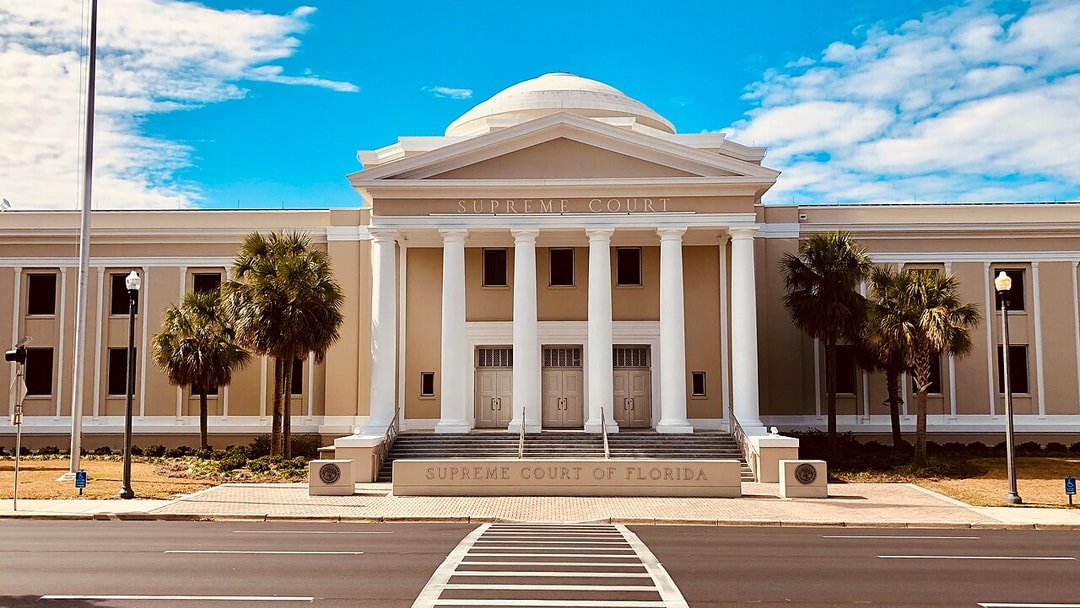
The Florida Supreme Court in Tallahassee in 2022. Photo: Urbantallahassee / Wikimedia Commons, CC BY-SA 4.0 (cropped).
A Florida judge recently reviewed a case in which one defendant was filing 20 or 30 lengthy documents a day. Ninth Circuit Chief Judge Lisa Munyon told The Florida Bar that AI-assisted filings are getting dramatically longer. She wants page limits on AI-generated documents, alongside limits on the number filed. Only a small minority of people representing themselves abuse the system, she said.
Her account comes as courts report more paperwork and staffing shortages. In an August survey of 116 judges and other court professionals by the National Center for State Courts and Thomson Reuters Institute, almost two-thirds reported seeing more AI-written filings from people without lawyers. Fifty-nine percent reported staffing shortages during the previous year.
In Other News
Fresh reporting examines the security implications of a personal AI agent reportedly running on a sensitive Pentagon system. (WIRED)
Human Rights Watch says it ran AI locally to keep sensitive footage in-house during a large investigation. (Human Rights Watch)
New York is restricting how AI chatbots can talk to minors. (New York law)
New York’s courts released an AI guide telling lawyers to verify AI output and check individual judges’ rules. (New York courts)
Axon’s license-plate-reader pilot narrowly survived a veto attempt in Los Angeles, where the council voted 9–6 to block it but needed ten votes. (LAist)
Washington’s secretary of state wants to use AI to help verify ballot signatures in 2027. (TVW)
LexisNexis is pushing more AI features, while attorney Greg Lambert says its downloads have labeled his own writing AI-generated. (Three Geeks and a Law Blog; LexisNexis)
NVIDIA released a superpowered transcription model that runs locally. (NVIDIA)
California’s new legal-aid AI guide says rules-based automation may be more reliable than generative AI for some tasks. (State Bar)
The latest legal AI offerings are moving toward fully built workflows, rather than tools lawyers have to customize themselves. (Legal IT Insider)
The FTC ordered nine companies, including Uber, Delta and Walmart, to explain whether personal data influences customer prices and worker pay. The inquiry makes no finding of wrongdoing. (FTC)
About Plain Thinking
Grant Morgan is an attorney, former prosecutor and former Tribune Publishing reporter who covered Gary, Indiana, and Chicago’s northern suburbs. Plain Thinking covers AI and consequential technology affecting lawyers, police and courts.
Every Tuesday and Friday · Get Plain Thinking by email · LinkedIn
If an issue includes paid placements, they’ll be clearly labeled. Companies don’t pay for editorial inclusion.


Join the discussion